Monday, August 31, 2026

250 to 250: 95. Joseph Pulitzer, Narrated by Connie Schultz


Heather Cox Richardson and 250 to 250: Joseph Pulitzer, Narrated by Connie Schultz

Connie Schultz is a Pulitzer Prize-winning columnist, journalism professor, and author of the New York Times bestselling novel, The Daughters of Erietown who writes a weekly Substack newsletter, Hopefully Yours. Schultz profiles Joseph Pulitzer, the immigrant publisher who shaped the modern American newspaper and lent his name to journalism's most prestigious prize.

Joseph Pulitzer was an important American newspaper publisher.


POP Interview and Quiz: 
  • N-400 Part 9:7.g. Have you ever caused harm or suffering to any person because of their race, religion, national origin, membership in a particular group, or political opinion?
  • USCIS 100:06. One is one right or freedom from the First Amendment?
  • USCIS 100:51 / 128:65. What are three rights of everyone living in the United States?


Family Fun:

Sunday, August 30, 2026

250 to 250: 94. Héctor García, Narrated by Representative Vicente Gonzalez


Heather Cox Richardson and 250 to 250: Héctor García, Narrated by Representative Vicente Gonzalez

United States Representative Vicente Gonzalez of Texas is an attorney who has served in public office since 2017. Here, Gonzalez details the life of Dr. Héctor Garcia, who advocated for the rights of Hispanic veterans

Dr. Hector P. Garcia served in the U.S. Army during World War II.
  • After the war, he returned to South Texas.
  • He worked as a doctor and helped people who had difficulty getting medical care.
  • He also helped Mexican American veterans get government services and benefits.
  • In 1948, Garcia started the American GI Forum.
  • The organization worked for veterans and civil rights for Hispanic Americans.
  • Garcia spoke out against poverty and discrimination.
  • He worked to end the poll tax in Texas, which made it harder for poor people to vote.
  • He also supported better pay and living conditions for farmworkers and other workers.
  • Garcia worked for equal rights and opportunities for Hispanic Americans.
In 1984, President Ronald Reagan gave him the Presidential Medal of Freedom.


POP Interview and Civics Quiz:


Family Fun:

Saturday, August 29, 2026

250 to 250: 93. Americans with Disabilities Act, Narrated by Marlene Sallo


Heather Cox Richardson and 250 to 250: Americans with Disabilities Act, Narrated by Marlene Sallo

Disability and civil rights activist Marlene Sallo is the Executive Director of the National Disability Rights Network and former appointee of the U.S. Commission on Civil Rights under the Obama administration. Sallo explains how activists pushed for the American Disabilities Act, which bars discrimination against people living with physical or mental disabilities. ‪

The Americans with Disabilities Act (ADA) is an important U.S. civil rights law.
  • The ADA protects people with physical and mental disabilities from discrimination.
  • Employers must provide reasonable help so people with disabilities can do their jobs.
  • Public places must also be more accessible to people with disabilities.
  • Many people with disabilities worked together to support the ADA.
In March 1990, the ADA was still waiting for approval in Congress.


POP Interview and Civics Quiz: 
  • N-400 Part 2:11. Do you have any physical or mental impairment that prevents you from demonstrating your knowledge of the English language or civics requirements for naturalization? 
  • N-400 Part 9:33. Are you unable to take the Oath of Allegiance because of a physical or developmental disability or mental impairment?
  • USCIS 100:16.  Who makes federal laws?
  • USCIS 128:20.  Name one power of the U.S. Congress. *


Family Fun:

Friday, August 28, 2026

250 to 250: 92. Betty Carnes, Narrated by Jessica Knurick


Heather Cox Richardson and 250 to 250: Betty Carnes, Narrated by Jessica Knurick

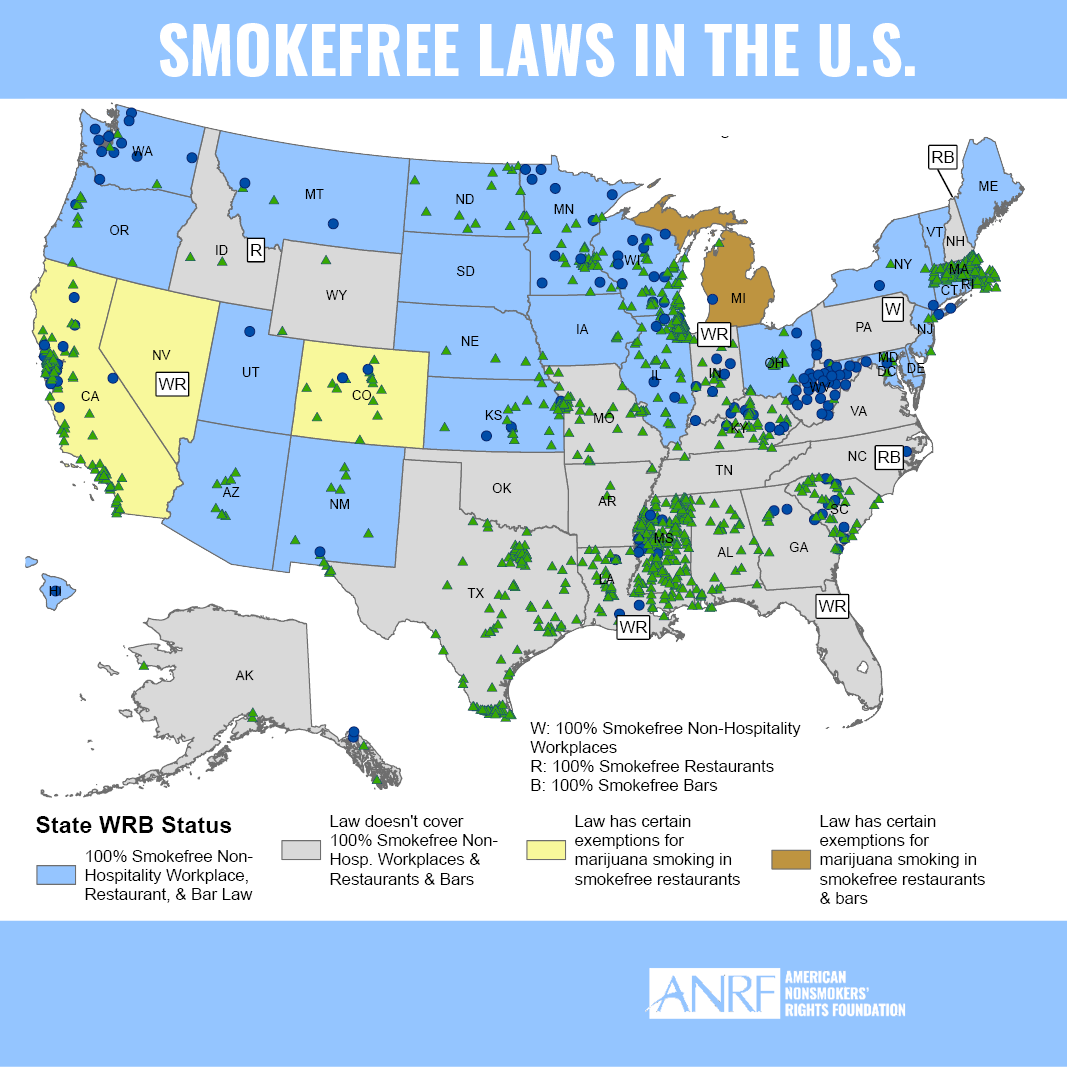
Dr. Jessica Knurick is a science communicator and nutrition scientist, specializing in chronic disease prevention. She educates on nutrition science, food and nutrition policy, and how these forces shape public health. She is passionate about making science accessible, practical, and grounded in real-world impact. Knurick details the inspiring life of Betty Carnes, an Arizona ornithologist who fought for smoking bans in public places after losing her friend to lung cancer.

Betty Carnes was a bird scientist from Arizona.


POP Interview and Civics Quiz: 
  • USCIS PM-602-0188Do you volunteer or help your community?
  • USCIS 100:55. What are two ways that Americans can participate in their democracy?
  • USCIS 128:69. What are two examples of civic participation in the United States?


Family Fun

Thursday, August 27, 2026

250 to 250: 91. Charles Ives, Narrated by David Lang


Heather Cox Richardson and 250 to 250: Charles Ives, Narrated by David Lang

David Lang is a Pulitzer Prize-winning American composer, a Professor at the Yale School of Music, and a co-founder of the legendary New York-based music collective Bang on a Can. Here, Lang profiles composer Charles Ives, whose radical fusion of European classical style and American folk traditions created a fearless template for American music.

Charles Ives was an American composer.


POP Interview and Civics Quiz: 
  • N-400 Part 7:1. Have you had any other jobs in the past five years?
  • USCIS 100:98. / 128:123.  What is the name of the national anthem?


Family Fun:

Wednesday, August 26, 2026

250 to 250: 90. Barbara Shermund, Narrated by Liza Donnelly


Heather Cox Richardson and 250 to 250: Barbara Shermund, Narrated by Liza Donnelly

LizaDonnelly‬ is a writer and award-winning New Yorker cartoonist covering culture and politics for forty years. She pioneered live drawing, a form of digital visual journalism and directed the 2025 documentary, Women Laughing. Donnelly profiles cartoonist, Barbara Shermund whose irreverent New Yorker drawings captured the spirit of first-wave feminism and the liberated women of the 1920s and '30s.

Barbara Shermund was an American cartoonist.


POP Interview and Civics Quiz: 
  • N-400 Part 2:5 What is your sex?
  • USCIS 100:77.  What did Susan B. Anthony do?
  • USCIS 128:102. When did all women get the right to vote? 


Family Fun:

Tuesday, August 25, 2026

250 to 250: 89. Integration in Little Rock, Narrated by Reverend Liz Walker


Reverend Liz Walker is an award-winning broadcast journalist, humanitarian, and ordained minister best known as the first Black evening news anchor in Boston. Reverend Walker credits her experience in the second wave of desegregation at Little Rock Central High School to her trailblazing efforts for intercultural dialogue and social justice.

In 1954, the U.S. Supreme Court ruled against segregation in public schools.
In 1957, nine Black students enrolled at Central High School in Little Rock, Arkansas.
President Dwight D. Eisenhower took control of the National Guard.
The Little Rock Nine showed great courage as they helped integrate public schools.


POP Interview and Civics Quiz: 
  • N-400 Part 9:7. Have you EVER ordered, incited, called for, committed, assisted, helped with, or otherwise participated in intentional harm or suffering to any person becaue of their race, religion, national origin, membership in a particular group, or political opinion?
  • 100:84 / 128:112.   What did the civil rights movement do?


Family Fun:

Monday, August 24, 2026

250 to 250: 88. Jewish Community of Early Savannah, Narrated by Rabbi Robert Haas


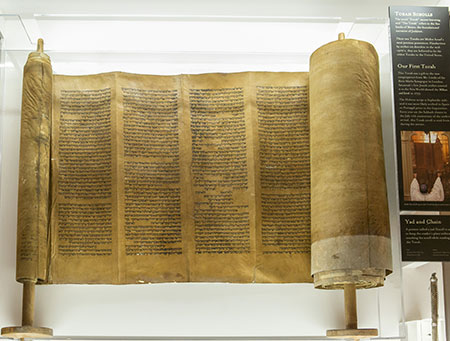
Rabbi Robert Haas is the 14th spiritual leader of Congregation Mickve Israel in Savannah, Georgia and a sought-after lecturer, comedian, preacher, and interfaith leader. Rabbi Haas tells the story of the Jewish refugees who arrived in Savannah in 1733 and founded Congregation Mikve Israel, the oldest Jewish congregation in the American South.

The colony of Georgia was founded in 1733.
In 1820, the congregation dedicated a new synagogue.


POP Interview and Civics Quiz: 
  • N-400 Part 9:7. Have you ever stopped someone from practicing their religion?
  • USCIS 100:10. What is freedom of religion?
  • USCIS 128:65. What are three rights of everyone living in the United States? 
  • USCIS 100:58. / 128:73. What is one reason colonists came to America?


Family Fun:

Sunday, August 23, 2026

250 to 250: 87. Sandra Day O'Connor, Narrated by Joyce White Vance


Heather Cox Richardson and 250 to 250: Sandra Day O'Connor, Narrated by Joyce White Vance


  • She studied law and had a long legal career.
  • In 1981, President Ronald Reagan nominated her to the U.S. Supreme Court.
  • The Senate voted to approve her.
She became the first woman to serve on the U.S. Supreme Court.
O'Connor retired from the Supreme Court in 2006.


POP Interview and Civics Quiz: 
  • Part 9:15a. Have you EVER been arrested, cited, detained, or confined by any law enforcement officer, military official (in the U.S. or elsewhere), or immigration official for any reason, or been charged with a crime or offense, or notified that you were being investigated for a crime?
  • USCIS 100:39. How many justices are on the Supreme Court?
  • USCIS 128:55. How long do Supreme Court justices serve?


Family Fun:


Saturday, August 22, 2026

250 to 250: 86. Green Mountain Boys, Narrated by Representative Becca Balint


Heather Cox Richardson and 250 to 250: Green Mountain Boys, Narrated by Representative Becca Balint

U.S. Rep. Becca Balint has represented Vermont in Congress since 2023, making history as the first woman and openly LGBTQ+ person to do so. A former teacher and state legislator, Rep. Balint is the daughter of a working-class mother and immigrant father and has dedicated her career to fighting for working people, defending democracy, and ensuring every community has a voice. Balint talks about the Green Mountain Boys, the Vermont militia known for its heroics during the Revolutionary War

Ethan Allen was a farmer and landowner.
  • In the 1760s, he helped form the Green Mountain Boys.
  • The Green Mountain Boys were a militia group in the area that is now Vermont.
  • They first worked to protect settlers and their land.
  • During the American Revolution, they fought against the British.
  • On May 10, 1775, they captured Fort Ticonderoga.
  • This was an important early American victory.
  • The Americans captured cannons and other weapons at the fort.
  • The Continental Army later used these cannons near Boston.
  • In March 1776, the British left Boston.
  • Ethan Allen helped give the colonists hope that they could defeat the British.
  • The Green Mountain Boys became famous for their role in the fight for American independence.


POP Interview and Civics Quiz: 
  • N-400 Part 9:8.b. Have you EVER served in, been a member of, assisted (helped), or participated in any armed group (a group that carries weapons), for example: 
    • paramilitary unit (a group of people who act like a military group but are not part of the official military)
    • self-defense unit
    • vigilante unit
    •  rebel group
    • or guerrilla group?
  • USCIS 100:61. Why did the colonists fight the British?
  • USCIS 128:77. Name one reason why the Americans declared independence from Britain.


Family Fun:

Friday, August 21, 2026

250 to 250: 85. Shays' Rebellion, Narrated by Senator Elizabeth Warren


Heather Cox Richardson and 250 to 250: Shays' Rebellion, Narrated by Senator Elizabeth Warren

Elizabeth Warren is a prominent and influential progressive U.S. Senator from Massachusetts with a strong focus on economic justice, consumer protection, and financial regulation. Warren recounts Shays' Rebellion, the farmers' uprising that exposed the weakness of the Articles of Confederation and spurred the drafting of the Constitution. ‪

In 1786, many farmers in western Massachusetts had money problems.


POP Interview and Civics Quiz:


Family Fun:

Thursday, August 20, 2026

250 to 250: 84. Apollo 11, Narrated by Senator Mark Kelly


Heather Cox Richardson and 250 to 250: Apollo 11, Narrated by Senator Mark Kelly

Mark Kelly has served his country as a U.S. Navy combat pilot, a NASA astronaut, and now as a U.S. Senator for Arizona. Kelly reflects on the improbable quest to send American astronauts to the moon. 

On July 20, 1969, Apollo 11 landed on the Moon.
Seven years later, the United States achieved this goal.


POP Interview and Civics Quiz:
  • N-400 Part 9:37. If the law requires it, are you willing to perform work of national importance under civilian direction (do non-military work that the U.S. Government says is important to the country)?
  • USCIS 100:53. What is one promise you make when you become a United States citizen?
  • USCIS 128:118Name one example of an American innovation.


Family Fun:

Wednesday, August 19, 2026

250 to 250: 83. Palmer Raids, Narrated by Allison Gill


Heather Cox Richardson and 250 to 250: Palmer Raids, Narrated by Allison Gill

Allison Gill hosts and executive produces the GLAAD-nominated and Webby-award-winning podcasts The Daily Beans, Cleanup on Aisle 45, and UnJustified, and is the founder of the MSW Media podcast network. Gill recounts the Palmer Raids of 1919–1920, when thousands of Americans were arrested without warrants during the nation's first Red Scare.

After World War I, many Americans became afraid of communism and political violence.


POP Interview and Civics Quiz:
  • N-400 Part 9:5.  Have you EVER been a member of the communist part or a group that opposed all governemnt?
  • USCIS 100:51.  What are two rights of everyone living in the United States?
  • USCIS 128:65.  What are three rights of everyone living in the United States? 


Family Fun:

Monday, August 17, 2026

250 to 250: 82. Citizens United, Narrated by Steve Bullock


Heather Cox Richardson and 250 to 250: Citizens United, Narrated by Steve Bullock

Former Montana Governor and Attorney General Steve Bullock led the states’ efforts challenging the U.S. Supreme Court’s 2010 Citizens United v. FEC decision. His case, ATP v Bullock, remains the only case to reach the Supreme Court directly challenging Citizens United. He remains a prominent figure in the national conversation surrounding money in politics.

In 2010, the U.S. Supreme Court decided the case Citizens United versus Federal Election Commission.
  • The case was about money and political campaigns.
  • The Court made its decision by a 5–4 vote.
  • The Court ruled that corporations and labor unions can spend money independently to support or oppose political candidates.
  • The decision changed earlier limits on this type of political spending.
  • After the decision, outside spending in federal elections increased greatly.
  • Some political groups can spend money without publicly identifying all of their donors.
  • This is sometimes called “dark money.”
Supporters of the decision say political spending is protected by freedom of speech.
Critics of the decision say large amounts of money can give wealthy groups too much influence in elections.


POP Interview and Civics Quiz:
  • N-400 Part 9:2. Have you EVER registered to vote or voted in any Federal, state, or local election in the United States?
  • USCIS 100:37 / 128:51. What does the judicial branch do? 
  • USCIS 128:54.  How many Supreme Court justices are usually needed to decide a case?
  • USCIS 100:50. Name one right only for United States citizens.
  • USCIS 128:64. Who can vote in federal elections, run for federal office, and serve on a jury in the United States?


Family Fun:

250 to 250: 81. 54th Massachusetts Infantry Regiment, Narrated by Kevin M. Levin


Kevin M. Levin is an award-winning historian and educator, and the author of four books on the history and memory of the Civil War era, including his forthcoming biography, A Glorious Fate: The Life and Legacy of Colonel Robert Gould Shaw. He writes the popular newsletter Civil War Memory. Levin tells the story of the 54th Massachusetts and its hesitant young colonel, whose 1863 assault on Battery Wagner moved the nation closer to emancipation and equal rights.

During the Civil War, the Union Army created the 54th Massachusetts Infantry Regiment.
On July 18, 1863, the 54th Massachusetts attacked Fort Wagner near Charleston, South Carolina.


POP Interview and Civics Quiz:
  • N-400 Part 9:8. Have you EVER served in, been a member of, assisted (helped), or participated in any military or police unit?
  • USCIS 100:74.  Name one problem that led to the Civil War.
  • USCIS 128:96. What U.S. war ended slavery?


Family Fun:

Sunday, August 16, 2026

250 to 250: 80. Roger Sherman, Narrated by Governor Ned Lamont


Heather Cox Richardson and 250 to 250: Roger Sherman, Narrated by Governor Ned Lamont

Ned Lamont is an American policy innovator, entrepreneur, and the 89th Governor of Connecticut. Governor Lamont profiles Roger Sherman, the tireless Connecticut founder who signed all three of America's founding documents and whose Connecticut Compromise—adopted July 16, 1787—shaped the Congress we know today. 

Roger Sherman was an important leader during the American Revolution.
  • He was from Connecticut and worked as a shoemaker when he was young.
  • In 1787, leaders met to write the U.S. Constitution.
  • Large states wanted representation based on population.
  • Small states wanted equal representation.
Sherman helped create the Connecticut Compromise, also called the Great Compromise.


POP Interview and Civics Quiz:
  • N-400 Part 4:01. What is your physical (home) address and zip code?
  • USCIS 100:17. / 128:19.  What are the two parts of the U.S. Congress?*
  • USCIS 128:28.   Why does each state have two senators?
  • USCIS 100:25.  Why do some states have more Representatives than other states?
  • USCIS 128:35.   Some states have more representatives than other states. Why?


Family Fun

Saturday, August 15, 2026

250 to 250: 79. The “Great Society” Speech, Narrated by Governor Gretchen Whitmer


Governor Gretchen Whitmer is the 49th Governor of Michigan, an educator, former prosecutor and lifelong Michigander. Whitmer revisits Lyndon Johnson's 1964 Great Society speech, in which he called on Americans to end poverty and racial injustice and shape the civilization they wanted. 

On May 22, 1964, President Johnson gave a speech at the University of Michigan.


POP Interview and Civics Quiz:
  • USCIS PM-602-0188. What is your highest level of education or training?
  • USCIS 100:55. What are two ways that Americans can participate in their democracy?
  • USCIS 128:69. What are two examples of civic participation in the United States?


Family Fun: